

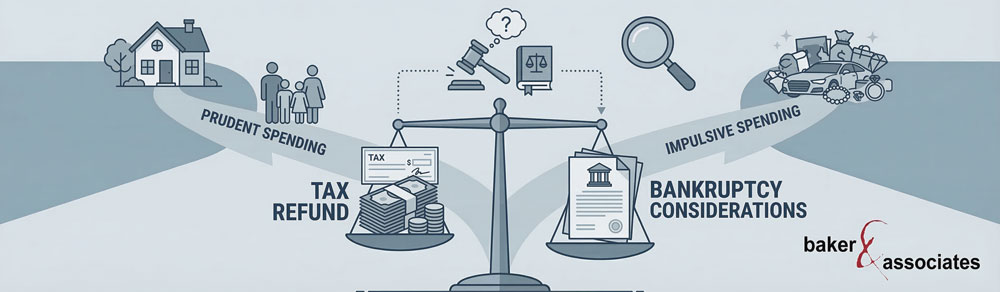

For many Houston families, tax refund season brings welcome relief. A refund can help cover overdue bills, rent, groceries, vehicle repairs, and other urgent expenses. But if you are considering bankruptcy, it is important to be careful about how you handle that money before you file.
A tax refund can be useful, but it can also affect the timing and strategy of a bankruptcy case. Understanding a few key issues now may help you avoid problems later.
Why Tax Refunds Matter in Bankruptcy
When you file for bankruptcy, you must disclose your assets, income, debts, and recent financial activity. Depending on when you file, a tax refund may become part of that picture.
That does not necessarily mean you will lose your refund. However, it does mean the amount of the refund, the timing of your filing, and the way the money is spent can all matter. This is one reason people thinking about Chapter 7 or Chapter 13 bankruptcy should avoid making major financial moves without first speaking to an attorney.
Common Mistakes to Avoid Before Filing Bankruptcy
When people are under financial pressure, it is understandable to use a tax refund quickly. Still, certain choices can create complications if a bankruptcy filing follows soon afterward.
1. Paying Back Friends or Family First
It may feel right to repay a relative or close friend who helped you through a difficult period. But paying back insiders before filing bankruptcy can create legal issues and may be reviewed closely in your case.
2. Making Luxury or Non-Essential Purchases
Using a refund for expensive electronics, vacations, jewelry, or other non-essential purchases can raise red flags. If bankruptcy is on the horizon, it is usually better to focus on reasonable and necessary expenses.
3. Moving Money Without a Clear Reason
Large cash withdrawals, transfers between accounts, or giving money away can make a case more complicated. Clear records and ordinary spending patterns are generally much easier to explain.
4. Waiting Too Long to Get Legal Advice
Some people wait until after the refund is gone before they talk to a lawyer. In many situations, that is the opposite of what helps most. Advice before you spend the funds can make a real difference.
Smart Ways to Use a Tax Refund Before Bankruptcy
In many cases, using a tax refund for ordinary, necessary living expenses is more appropriate than spending it impulsively. Examples may include:
- Paying rent, mortgage, or utility bills
- Buying groceries and household necessities
- Paying for needed medical care or prescriptions
- Repairing a vehicle used for work or family transportation
- Catching up on other necessary monthly expenses
- Paying bankruptcy attorney’s fees, when appropriate
The key is that the spending should be reasonable, documented, and connected to real financial needs.
Timing Your Bankruptcy Filing Can Matter
Timing is often important in a bankruptcy case. If you file before receiving your refund, the refund may need to be addressed in the case. If you receive the refund before filing, the way you use the funds may still be reviewed.
There is no one-size-fits-all answer. The best timing depends on your overall financial picture, the type of bankruptcy you may file, and the property or funds you are trying to protect. In some situations, waiting a short time before filing may help. In others, filing sooner may be more beneficial.
How Tax Refunds May Be Treated in Chapter 7 vs. Chapter 13
The effect of a tax refund can vary depending on the chapter you are considering.
Chapter 7 Bankruptcy
In a Chapter 7 case, one major issue is what assets you have at the time of filing and whether those assets are protected by available exemptions. A tax refund may become part of that analysis.
Chapter 13 Bankruptcy
In a Chapter 13 case, the court will also look at income, expenses, and your repayment plan. Depending on the facts, tax refunds may affect how your plan is structured or what payments are required over time.
Because Chapter 7 and Chapter 13 work differently, it is important not to rely on general advice from friends, relatives, or online forums that may not apply to your circumstances.
Keep Good Records of How the Refund Is Used
If you have received a tax refund or expect one soon, keep documentation showing exactly what happened to the money. Helpful records may include:
- Your tax return
- Bank statements
- Receipts for purchases
- Proof of bill payments
- Invoices for repairs, medical costs, or other necessary expenses
Good records can make it easier for your attorney to evaluate your case and guide you toward the best filing strategy.
Talk to a Houston Bankruptcy Lawyer Before You Make a Costly Mistake
A tax refund can provide needed breathing room, but it can also create problems if it is handled without a plan. Before you spend a significant refund, it is wise to understand how it could affect a future bankruptcy filing.
If you are considering Chapter 7 bankruptcy or Chapter 13 bankruptcy in the Houston area, speaking with an experienced attorney can help you protect your options and avoid unnecessary setbacks.
Contact Baker & Associates to discuss your financial situation and learn what steps may make the most sense before filing.