



Holiday Debt Hangover? A Practical Game Plan Before It Snowballs
Filed under: bankruptcy
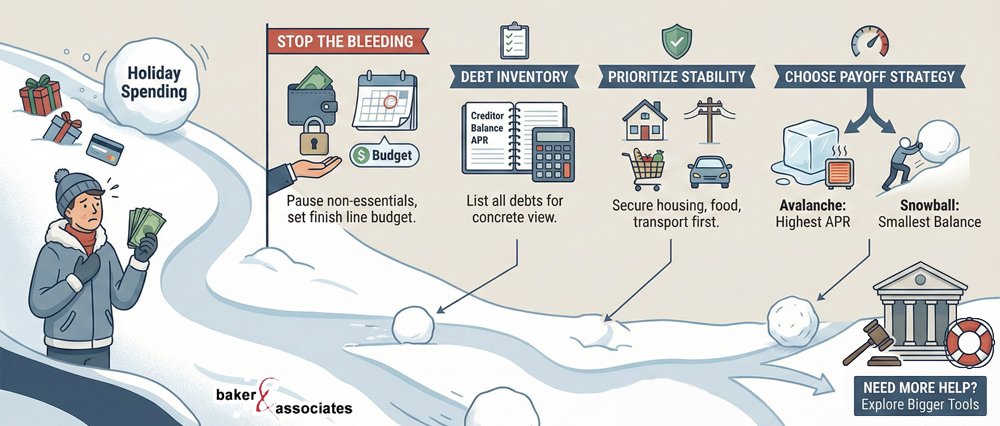
Between gifts, travel, school breaks, and “we’ll figure it out later,” it’s easy for holiday spending to quietly turn into January panic. And with credit card interest rates still hovering around the mid-20% range for many borrowers, balances can grow faster than people expect.
If you’re feeling that familiar “debt hangover,” here are a few steps you can take right now—while the calendar is still in your favor.
Step 1: Stop the bleeding (without ruining the holidays)
You don’t need perfection—you need control.
- Put a temporary pause on non-essentials (even a 2–4 week “spending freeze” helps).
- Unsubscribe from retail emails and remove saved cards from shopping apps.
- Set a realistic “holiday finish line” budget for the remaining events.
Building a simple spending plan and tracking what you spend can help you shift money to what matters most.
Step 2: Do a quick debt inventory (15 minutes, no judgment)
Open a notes app or a sheet of paper and list:
- Creditor name
- Balance
- Minimum payment
- Interest rate (APR)
- Due date
This turns “I have too much debt” into a concrete problem you can plan around.
Step 3: Prioritize the bills that keep life stable
When money is tight, the goal is stability first:
- Housing and utilities
- Transportation (car note/insurance/gas)
- Food and essentials
- Minimums on priority debts
Then you can decide how aggressively to tackle credit cards and other unsecured balances.
Step 4: Choose one payoff strategy and stick with it
Two common approaches:
- Avalanche method: pay extra on the highest APR first (often saves the most money).
- Snowball method: pay extra on the smallest balance first (often feels motivating faster).
The important part isn’t which one you pick—it’s committing to one plan long enough to see progress.
Step 5: Know when “tightening the belt” isn’t enough
Sometimes the math simply doesn’t work—especially if minimum payments barely touch principal because of high interest. In those cases, it may be time to look at bigger tools.
Bankruptcy can be a path to relief for overwhelming credit card debt, and Chapter 7 vs. Chapter 13 can look very different depending on your income and goals.
If you’re dealing with aggressive collection activity (lawsuits, garnishments, nonstop calls), the automatic stay is one of the most immediate protections that can come with filing.
Talk to a Houston bankruptcy attorney about your options
If you’re in Greater Houston (or Bryan/College Station or the Rio Grande Valley) and you’re trying to decide whether to keep pushing through—or whether it’s time to explore bankruptcy options—Baker & Associates can help you evaluate the right next step for your situation.
Call (713) 979-2279 to talk through your options.
Disclaimer: This blog post is for general informational purposes only and does not constitute legal advice. Your specific situation may vary. Please consult with an attorney at Baker & Associates to discuss your particular case.